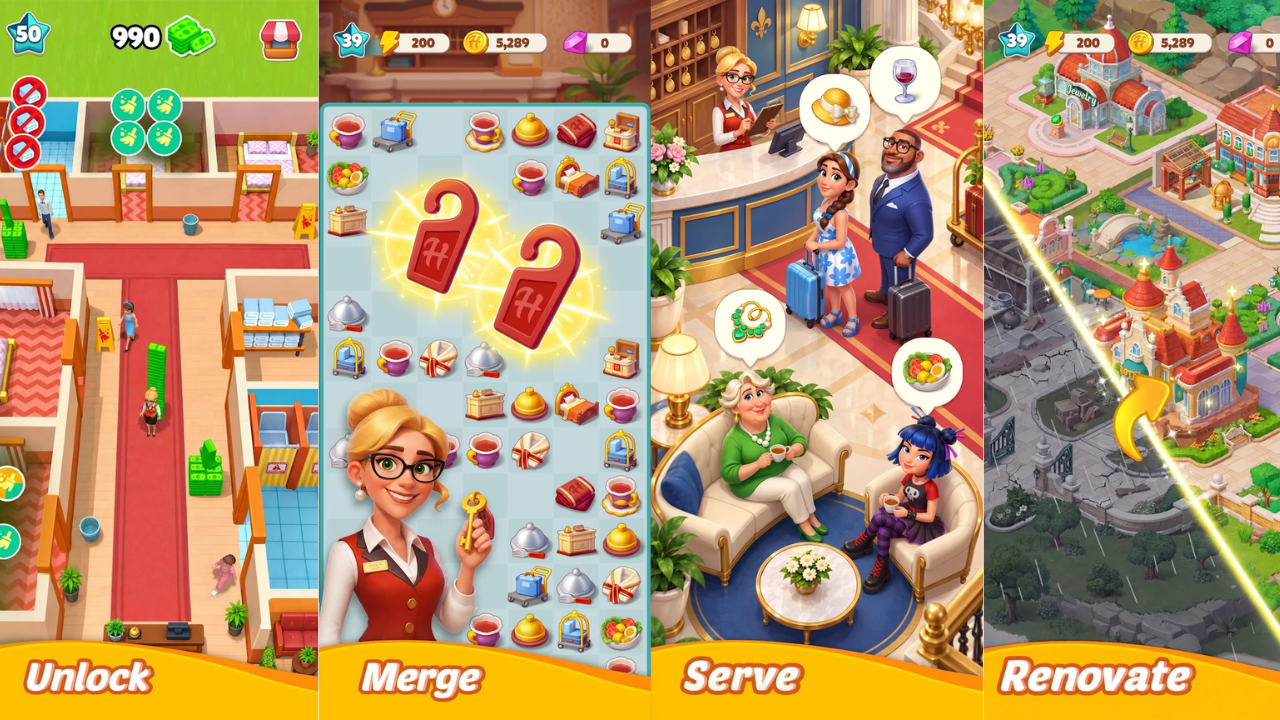
The biggest appeal of the game is the merge system. Players begin with a board filled with basic objects, and by combining identical items, they create higher-level versions. A simple object can eventually become a valuable tool, decoration, or item needed for hotel restoration. This process creates a feeling of progression because nothing collected feels completely useless. Even small items contribute to larger goals.
The merge mechanic is designed around patience and planning. Unlike traditional puzzle games where speed is often the priority, Hotel Legacy rewards players who think ahead. Managing the board space becomes important because every available slot matters. Creating powerful items requires multiple merges, so players need to decide whether to immediately complete a small task or save resources for a bigger reward.
The heart of the game is the hotel renovation. As players complete objectives, they earn the ability to repair damaged rooms, improve decorations, and unlock new sections of the property. The transformation is one of the most enjoyable parts of the experience. Seeing an abandoned lobby become elegant, or an empty room become a comfortable guest area, gives the game a strong sense of accomplishment.
This renovation system is similar to what makes many home-design and restoration games popular. Players are not just collecting random rewards; they are working toward a visible result. Every completed project changes the appearance of the hotel, making progress feel meaningful. The game encourages players to return because there is always another room waiting to be restored.
One of the most important resources in Hotel Legacy: Merge Game is Energy. Like many merge-based mobile games, Energy controls how often players can interact with the main gameplay board. Almost every action requires Energy, especially generating new items, completing merges, and progressing through tasks.
Energy creates a natural rhythm for the game. Players can enjoy several minutes of active gameplay, then wait for Energy to recharge before returning later. This system works well for casual players who enjoy checking their progress throughout the day rather than playing continuously for hours.
Smart Energy management is important. Wasting Energy on unnecessary merges can slow progress, especially during bigger renovation projects that require many specific items. Experienced players learn to focus on objectives instead of randomly combining everything on the board. Completing task requirements efficiently allows Energy to stretch further.
Energy can also become one of the reasons players consider spending premium currency or watching advertisements. When players are close to finishing an important renovation or event, running out of Energy can be frustrating. The game creates moments where having extra Energy feels valuable, especially for players who enjoy fast progression.
A good strategy is to avoid using all Energy immediately. Saving some for important tasks or special events can make progress smoother. Players who plan their actions often advance faster than those who simply merge everything available.
Another major resource in Hotel Legacy: Merge Game is Gems. Gems function as one of the premium currencies in the game. They are usually more limited than regular resources and are designed to provide convenience, speed, and additional options.
Gems are valuable because they help reduce waiting times. Players can use them to purchase certain items, refresh opportunities, speed up progress, or gain advantages during challenging moments. They act as a shortcut for players who want to move faster through renovations.
However, Gems are also a resource that should be spent carefully. Since premium currency is usually harder to obtain than normal coins, using Gems on every small convenience can quickly drain supplies. The best approach is saving them for situations where they create the biggest impact.
For example, spending Gems on an important missing item needed for a major hotel upgrade can be more useful than spending them just to complete a minor task. Patient players can often make better progress by collecting free rewards, completing achievements, and saving Gems for bigger opportunities.
The game’s use of Gems reflects a common mobile gaming design philosophy: free players can enjoy the full experience, while paying players can accelerate their journey. This creates flexibility because players can choose their preferred pace.
The third major currency is Coins. Compared with Energy and Gems, Coins are the everyday money of Hotel Legacy: Merge Game. They are earned through regular gameplay and are commonly used for upgrades, purchases, and other routine activities.
Coins create a steady progression system because players are constantly earning and spending them. Completing tasks, selling extra items, and finishing objectives usually provide opportunities to collect Coins. Unlike Gems, Coins are designed to flow more frequently, allowing players to continue improving their hotel without always needing premium currency.
Managing Coins is another important part of the strategy. While it can be tempting to spend everything immediately, saving Coins for important upgrades can prevent slowdowns later. The best players understand that every resource has a purpose.
One thing that makes Hotel Legacy: Merge Game enjoyable is how these three resources work together. Energy allows players to play, Gems provide flexibility and shortcuts, and Coins support regular development. Each resource has a different role, creating a balanced economy.
The game also succeeds because it creates a relaxing atmosphere. Many mobile games focus heavily on competition, rankings, or stressful challenges. Hotel Legacy takes a different approach by offering a peaceful experience where players can focus on creativity and gradual improvement.